Recommended

Blog featured image

Boost Your Self-Worth: A Practical Guide to Building Inner Confidence

Many people lose their self esteem or self worth due to certain instances that might have happened in the past. The words someone might have said, the circumstances that we have gone through, and the environment that we live in, tend to cause a direct impact on self worth.

The following exercises have been compiled after careful consideration of the different ways to improve self esteem:

01.Make a list of the negative things that you feel about yourself. Identify them.

For example: I am not a good cook. Remind yourself of the times that someone complimented your cooking. Replace the negative thoughts with the positive ones. When you make a list of the negative things that you think about yourself, cross them and write a positive note in front of it instead.

02.Make a list of the positive things about yourself. Write it down.

For example: My handwriting is awesome. Your list of the positive things about yourself should keep growing. The more positives you can count when compared to the negative ones, the higher impact you can feel on the change in perception of yourself.

03.Start forming relationships that are positive.

Oftentimes, we keep talking and engaging with negative people because we have few people in our lives with whom to communicate. We let those people affect our psychological stability. We run after them despite the fact that they keep bringing us down. Replace those people with positive ones. 

If you don’t have positive relationships in life, then start talking to like-minded people as often as possible. Further, learn to close your mind against negative words and actions from the people around you. Start somewhere and talk positively. Being positive should become a habit. 

04.Take a Break

Never think that you have to be perfect all the time. You cannot be positive all the time. It’s ok to feel bad at times and negative. But, it is in your hands to replace the negative thoughts with the positive ones. It will only come with practice. Start being kind to yourself. Know your limitations and the things that cause frustrations.

Give yourself a treat every time you complete a hard task. Eat a chocolate, a donut.. Anything that you might like. Stop saying negative things about yourself to people. The more you hear negative things about yourself, the more you will start believing them. When you are tired, give yourself a break. Take smaller steps so you don’t be too harsh on yourself.

05.Physical Health Improvement

If you look good, you will definitely feel good. Physical health is often taken for granted. Imagine yourself looking in the mirror, half your current size or weight. You will automatically start feeling good about yourself, and your self-esteem will improve gradually. Make a routine and stick to it. Not for anyone else, but for yourself. Because you want to see a better version of yourself.

Self-esteem improvement does not happen in a day. It happens gradually and over time, by taking small, gradual steps. These first 5 steps should start making a difference in your life. Once you have integrated these 5 steps and you feel a change, we can start with the next 5.

PS: You are already awesome! We just need to make a few changes in the subconscious to make your consciousness feel better about yourself..

Blog featured image

Quick Mood Fixes: 12 Simple Ways to Feel Happier Today

There are many days when nothing in the world around you is wrong, but you still feel sad, depressed, or angry at the world, or just in a bad mood that you can’t shake off.

Even if there is a deep-seated reason and you are not ready to face your feelings, the following tips can help you overcome your bad mood almost immediately. Let’s kick off your endorphins and help you pick yourself up on the bad days.

1. Identify the source of the problem and deal with it

The best way to move forward is to deal with the source of the problem or the issue. If you don’t know the problem, then retrace the past few days and find out when the change in you occurred. If the change in the mood happened very recently, trace back the last 24 hours.

Once you know what exactly caused it, you can either let it go, confront the person who caused it, get on with the task that caused the mood change, or just deal with the problem as positively as possible. The idea is to help you tell your brain that the issue is resolved, and I can move forward to the next challenge at hand or something that excites me.

If you are not ready to deal with it, let’s move on to some temporary fixtures that can help.

2. Cook something healthy for yourself/Order out

Think about what you love to eat. Something that brings a smile to your face. Either cook it or call for it. Not everyone is a great cook. But everyone has the right to enjoy great food. So, order your favourite food and enjoy it with something that you love to do as well (It could be a book, a show, a family gathering, or anything that you love to do)

3. Grab some motivational quotes or videos and feel what the words of the speaker are trying to tell you

There are thousands of them available online. Motivational quotes or videos by some famous people can really help you get out of the mood or the bed and get up and do something for yourself. Some names: Sonu Sharma, Jay Shetty, Sandeep Maheshwari, Vivek Bhindra. And many, many more.

You can grab some motivational books. Write down the ones that have an impact on you in a small diary and revisit the pages each morning to help you get going. A small saying I heard somewhere that really motivated me – It’s a great privilege to be who you are! Never forget and never take it for granted!

4. Put on soothing music

Music is one of my favourite things to do. You might like to put on some great music. It could be anything. I, for one, love to put on some Arijit Singh songs in the mornings. I love the beats and his voice. While I start doing my chores for the day, I keep humming and it makes me feel better. A new profound energy is felt.

I have the luxury to play it on speaker. But if you don’t, wear your headphones and go out for a walk if you have to. And see the magic happen!

5. Exercise

Not everyone loves to exercise. But physical activities increase endorphin levels and improve your blood flow. It is an instant refresher for your whole body, mind and soul. If done on a regular basis, it can really help you stay in shape, pick the perfect clothes for yourself and help you shine. Give it a shot and let me know what you think.

6. Have a pet? Play with it

Not everyone has a pet but if you do, play with it. Step out of the house with a toy. You could go to the park or maybe just play indoors. Your choice. But pets have the knack of offering unconditional love that can bring immense joy to you and lift up your mood instantly.

7. Spend time with family members

You may not have a great relationship with your family members. You might hate your siblings too. And it is very typical to have some people in the family that you are not very fond of. But it’s ok. Spending time with your family members is the best way to connect with them. It not only helps you from the short term perspective but also from the long term angle.

The more you connect and talk, the more you will be able to resolve the pending issues, get out of the past traumas and look forward to a happier life. Trust me. I have done this too and I was able to resolve a lot of things and move on. Even if your family members are not open to talking about their feelings or some instances, you share your thoughts and your heart out. Your genuine feelings will reach out to them for sure.

8. Hop on a call with your best friend

Best friends can bring in the best smiles. Even if they don’t bring a smile to your face, they can listen and help you take the weight off your chest. So, call your best friend and have an hour long chat. It will help you freshen up and move ahead. You might just be needing a change of pace in life and a crash action with a friend can really be the healing touch you needed at this hour.

9. Do something spontaneous

I love this one. Spontaneous actions and things are the best. I once got up in the morning and was feeling really low. I told my daughter let’s go out to play games in the nearest mall. One afternoon, I wanted to see the sunset from a hilltop. I grabbed my bag, drove to the nearest hill top in my pajamas and sat at the edge to just watch the sunset and spend time with my family.

These are some spontaneous things I have done, and these are the most memorable moments. Listen to your heart and see what it needs. Stop telling yourself why you can’t. Ask yourself, why not? Do something spontaneous or crazy.

PS: It was an act of spontaneity that I enrolled for a Master’s in English one fine morning. 😉

10. Laugh out Loud

It might sound scary and crazy, but it’s actually not. It’s one of the best things that you can do. You might not feel like laughing or even smiling right now. And for this very reason, there are so many videos of stand-up comedians on YouTube. Play one and laugh as loud and hard as you can. It is the most instant healer for low moods.

11. Take a few deep breaths or meditate

Meditation is a practice that has to be done daily. Check out the best practices and ways to do it. You might need just some peace and feel yourself breathe. We often forget that we are all just humans and have our own set of limitations. And you don’t need to feel ashamed of being too low some days.

Meditation can really help you clear your thoughts, gain a clearer perspective, and remove the cobwebs that have been clouding your mind. If you need additional help with this, I can provide it. Meditation and spirituality have saved me.

12. Check out your To-Do List and Tick Things Complete

Some people are so overwhelmed by the number of things that they have pending that looking at the task list scares them and brings them down. It might be the cause of your worries and the low mood of the day. So, check out the easiest of the tasks and mark each one as completed.

I love to write them down on a piece of paper and then mark them with a tick. That action itself helps me feel much better and gives me the motivation to move on to the next task.

Try them and let me know what works for you.

PS: Women also have the luxury to blame it on hormones or the monthly cycle. Grab some ice cream to make yourself feel a little better. 😉

I am curious to know about your experiences with these ideas. These are a rough draft. An eBook on these ideas is in the making. Hope these help.


Blog featured image

Unlocking Potential: The Six Pillars of an Effective Life Coaching Process

When you read the typical steps for an effective life coach, you might think that this is common knowledge and nothing out of the ordinary. But, having these steps at the back of your mind can always take you a long way. We tend to know things at times, but forget them until they are properly outlined and in front of us.

Based on what I have read, evaluated, and discussed with fellow life coaches in the past few years, the following steps are easy to know but difficult to actually implement with people.

Step 1: Define the Problem

This step is the biggest challenge for any life coach. Helping a person determine the exact problem is critical. Sometimes, the person might know what the problem is, at other times, they think they know what the problem is but are unable to realise the real cause of it. 

Asking the right questions can help you dive deep into the actual problem. Finding patterns and clues could assist the life coach in identifying the root cause of the problem. It is also essential to get the client to accept that the identified issue is the cause of trouble.

Step 2: Brainstorming on the Possible Solutions

Rather than giving recommendations or advice, it is always advisable to ask the client about the best ways they think they can solve the problem. The possible solutions should come from them. If they are unable to find a solution, then applying some exercises can help them understand that solutions are possible, but they have to find answers themselves.

Step 3: Evaluating Every Solution Honestly

Brainstorming every solution provided by the client is important. Running circles around the solutions should be avoided. Start by distinguishing the possible solutions (keeping them separate by making a list) and the probable outcomes that can be achieved. Next, identify the roadblocks that the client might face and the steps that they are ready to take to meet the outcomes. 

During the evaluation step, you can get a sense of the commitment levels of the client to the solutions that they initially listed.

Step 4: Picking out the Best Solution with a Life Coach

Once a discussion on all the possible solutions is done, the most appropriate solution should be picked. The healthiest solution is that which would ensure the client can achieve the results with the minimum number of problems. The client and not the life coach should pick the solution. If the client picks this solution from the list, then they are more likely to walk on the path.

Step 5: Planning the Best Action Steps to Execute the Solution

If the client does not have the courage to take steps to adopt the solutions, then the rest of the steps are irrelevant. The client should be determined to outline the actionable steps. Assigning weekly tasks to meet the ultimate goal is critical. The Life Coach must help them understand that completing the weekly tasks in small steps is the best way to move forward and achieve their goal.

Step 6: Pick out Dates for the Small Milestones

Help the client become accountable. They make a list of the action steps that they should be taking, but the Life Coach must also have this list. You should know which action step your client is going to complete this week so that you can ask them about it in the next week/session.

Some clients are ready to start with the action plan once they can visualize the outcomes that they are likely to achieve. On the other hand, some clients just like the view and will make several excuses for not executing the solutions. In the weekly meetings, you will see that no real progress is made, but they have complaints, excuses, and reasons for not taking action. 

If the client is serious enough, you can see the progress they have made in the action steps that were discussed in the previous meeting. 

Tip: Help Your Clients imagine the Success they will achieve when they reach the finish line.

Once you know about this, you might also want to read more through this article: Quick Mood Fixes

Blog featured image

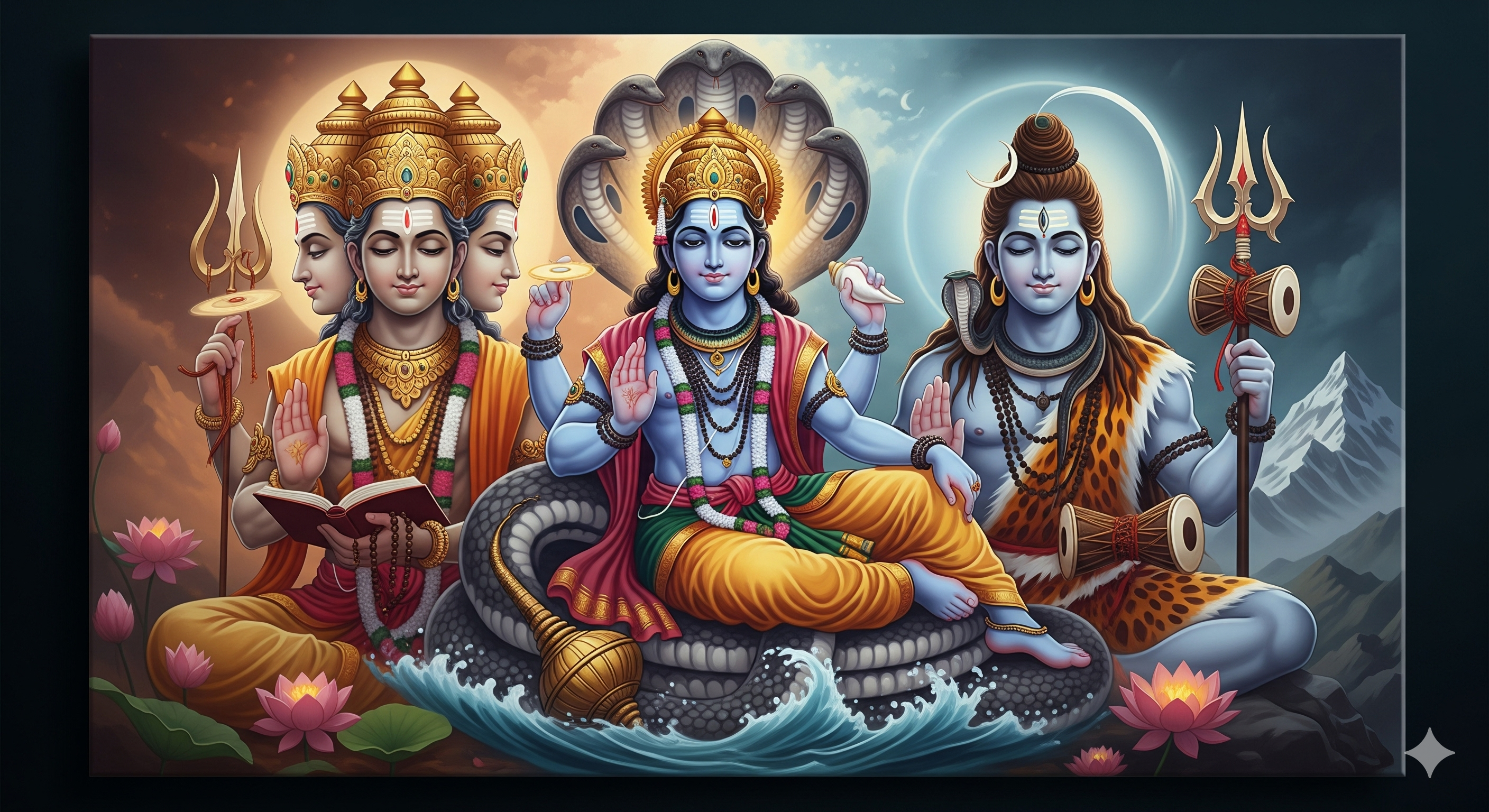
The Sacred Trinity: Brahma, Vishnu, Shiva in the Eternal Path of Sanatan Dharma

For a Modern Sanatani, it is essential to know the basics (like the sacred trinity), the pillars on which the religion stands and the most inherent thoughts that should drive our lives. In the Hindu Religion, the moment we say the words the Trinity of Gods – our immediate thought goes to three names – Brahma, Vishnu and Mahesh/Shiva. You are absolutely right! If you were not aware of the Trinity of Gods until now, I bring to you a collection of information that would definitely upgrade your knowledge considerably. 

After reading through a pile of books, watching documentaries, podcasts and more, I have been able to collect the basic characteristics of the Three Gods that rule us all. They are the center of the world and drive it every second of our life. Without any one of them, the world could be chaos.

Summarized View on the Sacred Trinity

Brahma VishnuShiva
Creator – World (Flora and Fauna), Vedas (Books of Knowledge), Manavs (Humans)Priest – Teacher
Chases Goddess – Knowledge and more
Relativity to Knowledge
Ensures Sustainability – Upholding the balance of nature and culture
King and Worldly God
Showcases love, passion, family life and importance of protecting Goddess/women
Relativity to Wealth
Destroyer – ego, selfishness and other evil characteristics
Ascetic Tries to Withdraw himself from Family Life – Goddess
Relativity to Power through Meditation, Yog and more. 

Once you understand the main characteristics of each God, you would know the importance each one of them holds in the balance of the world. Knowledge, Wealth and Power are the three main elements that every human being tries to chase throughout their life span. All three may not be easily attainable but you can acquire one or more in a lifetime.

Brahma

The role of Brahma is finished once the world and everything in it is created. The role of Hari (Vishnu) and Hara (Shiva) continues to play out throughout the entire lifecycle of a world. Our Vedas indicate that creation and destruction are inevitable. The lifespan of every living and non-living being is destined to come to an end. This paves way for the creation of yet another world where a chance is given to correct the karma, balance the sheets and work towards the achievement of Moksha (releasing oneself from the continuous cycle of birth and rebirth).

Vishnu

The role of Vishnu is sustainability. He is responsible for taking care of the balance of nature and culture in the world we live in. The following quote is often heard on TV, from spiritual leaders or on decorations in marketplaces. 

यदा यदा हि धर्मस्य ग्लानिर्भवति भारत। 
अभ्युत्थानमधर्मस्य तदात्मानं सृजाम्यहम्॥ 
परित्राणाय साधूनां विनाशाय च दुष्कृताम्।
धर्मसंस्थापनार्थाय संभवामि युगे युगे॥ भागवत गीता

The quote means that God Vishnu has vowed to come to earth every time the weight of evil becomes high for the Goddess Bhoodevi (earth) to bear. It is the responsibility of Vishnu to ensure that the world continues to function in the right manner. Although he does not interfere in the free will that is given to Humans, he definitely keeps a check on their actions. The reaction of every action is given in this lifetime or the next. He lets people make choices but when the consequences cause harm to the well-being of the functioning of nature as a whole, that is when he steps in to cleanse the world. 

Mahesh/Shiva

Shiva is the ultimate destroyer of everything evil. When the world has to be destroyed and remade, the responsibility falls on Shiva to step in. He is not just the God with the reset button but also the eliminator of all evil characteristics that in-built in Humans. Some of these include – dishonesty, selfishness, ego, laziness, greed, arrogance etc. 

He is the God who believes in the power of Meditation and Yoga. He teaches the Manavs how you can fight your natural instincts and work on yourself to reach your supreme potential. For example, if you cannot fight laziness, you cannot work hard and achieve the impossible in life. He gives the Power to acquire knowledge and wealth. Shiva is the destroyer of everything that stumbles in your way to success. 

My Thoughts:

The above information is summarized for the basic knowledge of newbies. If you crave for more knowledge, the best way forward is to keep reading. The more you indulge yourself in literature, the more you realise the ultimate truth of life. Give up on social media or binge watching shows on TV. It’s time we all wake up to the necessity of understanding the world, finding the purpose of life and achieving what we are destined for.

Once you know about the sacred trinity of the Gods, you might want to read about the Main Elements of Our Creation.

Heaven, Earth, and Beyond Understanding Hinduism’s Three Worlds

Heaven, Earth, and Beyond: Understanding Hinduism’s Three Worlds

Before you start understanding the meaning of the three worlds, let’s see if you know the basics of a human life. If you are even a little bit spiritually inclined, then your first thought would be to accumulate as many positive deeds in your lifetime as possible. From the beginning of our lives, our minds are moulded to conduct rituals in the right manner or do good deeds if we want to attain a place in heaven. The message is passed on from one generation to the next. Most of the time, it is heard in middle-class families where the culture and ideologies are still given more prominence when compared to others.

You might have heard phrases like – give donations (daan karo), feed the hungry (bhukhon ko khana khilao), feed the cows the first bread in the morning (subah ki pehli roti cow ko khilani chahiye) etc. All these activities are actually equities that you are collecting in one way or another. Their conduct is definitely accounted as a good deed. 

In these modern times, sometimes we either make excuses of being busy or demand reasonable explanations to conduct them. While some of us are waking up to the facts and understanding the importance of collecting good deeds, others are still ignorant. In this article, I shall attempt to shed light on the different lokas that exist as per the Hindu religion and ancient texts. 

If you become aware of the characteristics of the three main lokas, you can better understand the planes that we live on and where we could land up. The idea is to give more clarity to the importance of engaging in activities that are deemed good. Although there are several controversies on certain activities; however, in this article, we shall focus on the destination that we might land up on as per the accounts.  

In the following three sections, you can see an overview meaning of the three worlds followed by the characteristics that further define it:

1. Amravati

Amravati is essentially heaven. It is the destination that everyone aspires to reach. This is where the Devtas reside. The Loka is described as the celestial realm also known as Swarga. Individuals with exceptional amounts of good deeds get to enter this plane. The souls who land up here are entertained by Apsaras and Gandharvas. They also get to enjoy a big number of perks. 

2. Hiranyapura

Hiranyapura is the place where the serpents, demons, asuras, rakshas etc. reside. It is also known as the Bhogavati. It is present under the earth. In other religions like Christianity or Islam, you might hear the reference of Hell or Jahannum for this plane. It is a city called Patala where the souls are sent to do penance for their bad deeds. The souls are also lured by the demons with materialistic commodities. 

3. Bhu-Loka

The third part of the three worlds is the Bhu-Loka. It is known as the earth to us. It is a plane for humans to live along with animals, plants and other living things. When an individual dies, he/she is sent to the Pitraloka where the accounting of the deeds is done. Based on this, the destination of the soul is decided before it is given a chance to be reborn on earth or other lokas. 

It is important to note that the three lokas described here are present below the brahma loka (abide of Brahma), the Shiva loka (abode of Shiva) or the vaikunth (abode of Vishnu). Let’s give you a comparative analysis of the three worlds/lokas with a little more detail:

AmravatiHiranyapuraBhu-Loka
MeaningResidence of ImmortalsGolden City of Danavas, Asuras etc. Residence of all Living Things
RoleRealm ruled by IndraCity that attracts humans to conduct bad deeds to gain materialistic benefits and stay away from DharmaRealm of Humans where karma is most prominent. 
SymbolismGives high pleasure, merits and happiness as a reward for upholding Dharma Gives power without the need for Dharma. Offers money and grandeur things that move a person away from righteousness. Humans are given free will to work on their deeds and gain heaven or place in lower realms. It is all about action and taking responsibility for the reactions.
Builder/DesignerCity built by VishwakarmaCity built by Asuras – Maya DanavaPlane designed and built by Brahma

Three Worlds: Understanding the Application

The purpose of a Human life should be to liberate oneself from this cycle of Lokas. Birth and rebirth can be a never-ending process if a person does not work towards attaining moksha. In ancient texts, there are several methodologies provided to help humans realise the importance of Moksha and the processes. For example, there is tantra shastra, bhakti yoga, Jnana yoga, karma yoga, mantra yoga, kriya yoga, meditation, visitation of different holy places in the country and more. It is up to a practitioner on which mode to take up. 

Even if you are not putting a put forward towards accumulating good deeds, make sure you escape the routes that take you towards the bad ones. It is very easy to say such things when we live in competitive and materialistic worlds. But small attempts can move us along in the right direction.

Remember – Krishna highlighted in the Bhagvat – He is the Sakshi who walks along with every human being and bears witness to every deed done. Free will was given for a reason. Do not misuse it. It is easy actually easy to get lost in the race of it all or get attached to materialistic things. Stop, think and take the decision which most agrees with your psychology. Don’t think what people will think about you. 

If you liked this post, you might also like to read: Unveiling Swarga

The First Four Sons of Brahma: Foundational Figures in Hindu Cosmology

The First Four Sons of Brahma: Foundational Figures in Hindu Cosmology

In our journey to truly become a Modern Sanatani, it is important to know our history and the onset of our worlds in as much depth as possible and this journey starts by learning about facts such as the First Four Sons of Brahma. Based on my readings, I have accumulated as much wealth of knowledge as God planned to flow through me. My attempt is to give you all stories about one character in one place. Increase your knowledge base with this piece of information with me today:

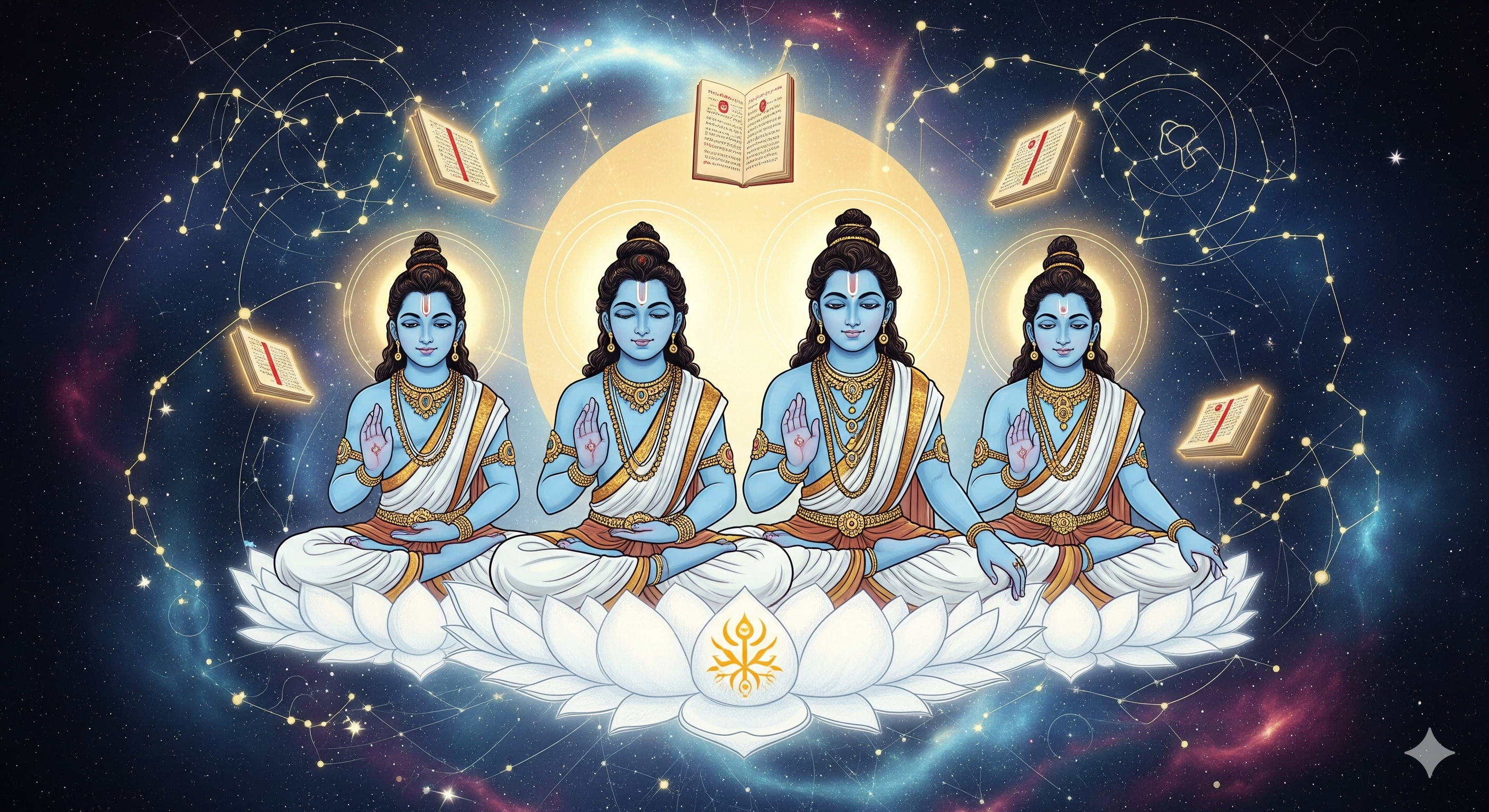
Who were the Sanat Kumaras?

According to the Vishnu Puran, the first God created was Vishnu. At the beginning of time, laying in the Ocean of Milk atop was Narayana. As he woke up from his sleep, out of his navel, came out a lotus on which Brahma was seated. As soon as Brahma opened his eyes, he asked Vishnu who he was, what was his role and why was he given birth. The puranas highlight the explanation of his origin being dictated by Narayan. Brahma’s soul purpose was to figure out a way to populate the Earth and find a way for the creation of an ideal world. 

Birth of the Four Kumaras

As Brahma had little clue on where to start, he created four boys/infants from his mind (They were also called the ancient ones, the first four sons of Brahma, the four Kumaras or Sanakadi Rishis.). The boys were very young (in many texts, they are indicated as beings born as infants). They looked at Brahma and asked him the reason for their birth. Brahma gave them the task to reproduce and populate the world. The four kumaras refused. It is often said that since the Kumaras were born before the sense organs were created, they did not comprehend the need for population. 

Characteristics of the Four Kumaras

The Kumaras highlighted that they did not want to put themselves in the cycle of birth and rebirth. They wanted to spend their lives seeking the ultimate truth, gain knowledge and learn the importance of life. The Kumaras were born with the understanding of Karma and how its circle can keep running once you step into it. They decided to step out at the beginning and continue their journey as true seekers. 

The names of the Four Kumaras or the First Four Sons of Brahma are – Sanaka, Sanandana, Sanatana and Sanatkumara. 

Some of the main characteristics of the Sanat Kumaras are:

  • Took a Vow of Eternal Celibacy – Brahmacharya
  • They went against the wishes of Brahma to become creators of Life – Even though they were the first four sons born from Brahma’s mind. 
  • They took the responsibility of spreading knowledge throughout the spiritual and the materialistic world later on
  • They studied Vedas in depth and understood the truth behind the world and its creation from the onset. They learnt the Vedas at the age of 5 or 6 years. 
  • They became the greatest yogis, siddhas and beings. 
  • As they reached enlightenment at a very young age, they were able to remain children forever and maintain their youth. Every time you see an image of Sanat Kumaras, you will always find them painted as young boys of not more than 5 years of age. 
  • They always travelled together 
  • Each one of them had a different feature that ruled their personality
  • They could never grow old and maintained their joyful nature. 
  • They were called the ancient ones, most knowledgeable and respectable rishis in the sansar.
  • They remained naked always as they never related themselves with the material world.

The Sanat Kumaras or the First Four Sons of Brahma were an embodiment of Purity. As they refused to help Brahma create the world, it is often said that the anger experienced by Brahma was so high that it gave birth to Shiva at that very moment. The Shaivists might not agree with this particular train of thought. The Shiv Puran states that it was Lord Shiva who gave birth to the other two Gods of our universe. The opinions may differ from one sect of believers to the other but the roles of every God remain the same throughout the different religious texts. 

Coming back to the Sanat Kumaras, the ancient texts highlight that the sensory organs in every living being are the cause of the majority of the problems that they face. As the sensory organs were absent in the Kumaras, it was easier for them to renounce the material world or the responsibilities and walk the path of being true God Seekers. 

An Interesting Story around the First Four Sons of Brahma

Although there are very few stories surrounding the four sanat kumaras, this story is one of the most important ones that shaped the history of our world as we know it today. As the four sanat kumaras were roaming around in the universe, they decided one day to visit Narayana and take some knowledge from him. Their journey towards the vaikunth was halted by Jaya and Vijaya. 

These two individuals were the gate keepers of Vishnu’s abode and they ensured that only the worthy souls were able to reach God himself. As the 4 sanat kumaras tried to enter the sacred abode, Jaya and Vijaya stopped them and asked them to come later as the God was in a deep slumber. They were not aware of the power and the importance of the 4 rishis. This was their biggest mistake. 

For being stopped at the gates and being refused entry to the abode, the 4 Kumaras cursed Jaya and Vijaya to take 7 births on the Bhulok and left the place. As the two gatekeepers were one of the biggest worshipers of Narayan, they immediately panicked. Taking births on Bhulok meant their separation from their God. They could not even imagine how they would be able to survive. 

The two gatekeepers immediately run towards Narayan and share the story in its entirety. They beg God to lift the curse. But Vishnu knew a curse by the 4 Kumaras could not be broken. But, he could ask them to alter the curse. So, the Jaya and Vijaya are presented with two options:

  1. Taking 7 births as the best friends of Vishnu when he reincarnates and takes birth on Bhulok
  2. Taking 3 births as the most devious and evil enemies of Vishnu when the reincarnations happen

Jaya and Vijaya immediately took the second option. They were ready to be ranked as the most devious beings in the world if it meant that they could return to the service of their God sooner. As it turns out, the curse came to pass. The three births taken by Jaya and Vijaya were:

The first most prominent enemies of Vishnu on earth were the two brothers – Hiranyakashipu and Hiranyaksha. Hiranyakashipu was the father of Prahlad and known for being one of the tyrannical Asura rulers known. To kill him, Narayan took the Narsimha Avatar. 

    Hiranyaksha was the mischievous Asura king who had submerged Bhudevi (earth) under water and terrorised the three worlds. To kill him, Narayan took the Varaha avatar. 

    The second prominent enemies of Vishnu were born in the Treta Yug – Ravana and Kumbhkaran. The two brothers were from the Rakshas community and gained a big number of boons from Lord Shiva and Brahma with their intense Sadhana and spiritual practices. Their arrogance and power terrorised rishis and other beings on earth. To kill them, Narayan took the Ram Avatar. 

    The third combination of enemies of Vishnu were Shishupal and Dantavakra. Both of them had immense enmity with Krishna because of his actions of killing Kansa and Salva. It is with the Krishna Avatar in the Dwapar Yug that these third set of enemies were killed. 

      With the end of the Dwapar Yug, Jaya and Vijaya finally got the liberation that they needed. Once and for all, they returned back to the vaikunth, awaiting the return of their God. 

      The Sanat Kumaras or the First Four Sons of Brahma had immense power but they never used the same for bad deeds. It is said that every action and reaction is all pre-destined and designed by God himself for the working of the Kaal Chakra. 

      You and I, we all have destinies designed by God as well. But, we also have free will that allows us to acquire good or bad karma. Every action taken can help us change our destiny and improve our future. It is all about the growth of the soul. As human beings, it is our responsibility to use this birth to acquire the good karmas and cancel out the bad ones. The soul craves for you to make the right choices and work towards liberation. 

      Every step counts. Let’s start somewhere!

      If you loved reading this, you might also like to check out this article: Yama God

      Blog featured image

      Unveiling Swarga: The Essential Components of Heaven

      Whether you look at Hinduism, Christianity or Islam, the promise of a heavenly abode or Swarga is assured if a person leads an ethical life. This particular concept has helped religious leaders, community heads and even the government in maintaining law and order to some extent. The fear of God and his judgement is often the sole reason why humans refrain from carrying out evil deeds. On the other hand, in some religions, the promise of heaven post terrorist activities (presented as a good deed) is used to pollute minds and further personal or political interests. 

      In Christianity, it is literally called Heaven, in Islam, it is called Jannat and in Hinduism, it is equated with Indralok. 

      Concept of Good or Bad Karma/Deeds/Merits

      Deeds are typically categorized in two sections – Good or Bad. Good deeds help a person gain positive points, making it possible to dream of heaven after death. The bad deeds on the other hand, are presented as a gateway to hell in Christianity and Islam. In Hinduism, there are references to the lower lokas that are designated to a truly evil person to endure punishments against the crimes committed before the soul is allowed to be reborn as a human being.

      Understanding Good and Bad Deeds in Hinduism

      In Hinduism, the accumulation of good or bad deeds is like a tally that is carried by a person from one life to another. The concept of birth and rebirth is only existent in Hinduism, Jainism and Buddhism. While good deeds assure a promise of a better life or a promotion to a better Lok, the bad deeds lead to the rebirth as a human in a bad household or as any other living creature. In either of the cases, the promise of a good life after rebirth is like heaven in Hinduism.

      Karma is all about actions that a person cannot escape throughout their lifetime. Merit is known as Punya and Demerits are known as Paap. There are also stories and references that suggest that even if a soul has entered the Indralok/Swarg, it must make sure that the actions are merits only. If not, the soul can be reborn as a human once again and reprimanded from the Swarg. 

      All these factors suggest that the entry to the Swarg is not permanent. A soul must consistently mould itself to perform merits throughout its lifetime. The escape from this kaal-chakra (vicious cycle of birth, rebirth and time) can only be done through merger with the supreme consciousness through the clearance of bad karma and investment in the good deeds alone. 

      In some ancient texts, the Indralok or abode of the Lord Indra is accounted as Swarga. It is the perfect place for a soul to land after accumulating enough good deeds in their account. The Swarga loka is anticipated to have all the pleasures of life. For example, exquisite food items, absence of hard work, tools for pleasure – Apsaras (Dancers) and Gandharvas (Musicians or Singers), abundance of gems and an everlasting peace of mind. 

      The Constituents of a Swarga

      The above discussion is merely a drop of information that is available in ancient hindu texts on this subject. In the following table, you can get more information on the major constituents of Swarga as per our vedic texts. A brief explanation would help in getting knowledge on the meaning of each. 

      Constituents Explanation
      ApsarasMost beautiful women are trained in 64 ways of giving pleasure to the 5 main senses
      KalpataruIt is a famous tree that was rewarded during the Samudra Manthan and placed in Indralok. The speciality of the tree is its everlasting nature and ability to give fruit as per the wish of the seeker
      VaruniRewarded during the Samudra manthan, it is a wine that gives immense joy without a hangover
      KamadhenuIt is one of the most famous objects that was churned and rewarded during the Samudra manthan. It is a cow that gives the most delicious food and milk products. The cow is often seen as a subject of controversies and fights among kings, priests etc. 
      AmritaIt is the biggest reward cherished by the Devatas. It is a nectar that gives the boon of health and ever-lasting youth. Amrita is not given to all souls but a selected few Devatas only. 
      ChintamaniIt is a jewel that can fulfill all the wishes of the seeker
      Akshaya-PatraIt is a pot filled with grains and jewels at all times. 

      Apart from the above-mentioned rewards, Indra Loka is often referred to as one of the most beautiful places for the souls to arrive at. Although it is not the highest loka, it offers the most pleasures to the seekers. It is a type of reward given. The reference to this is found even in the Mahabharata. Towards the end of their reign, the Pandavas also travelled for miles in search of Swarg/Indralok. After atoning for their sins during their lifetime, they were also given a place in the Swarg.

      If this article interested you, I am sure you would love to read more through this article: Elements of Creation

      What are the Top 10 Signs that it’s Time to Hire a Life Coach?

      What are the Top 10 Signs that it’s Time to Hire a Life Coach?

      If you’ve always assumed that hiring a life coach is specifically designed for celebrities or professionals from different disciplines, that’s not exactly accurate. Life coaching is not just for career-centric people like athletes, business executives, musicians, and teachers. It’s also meant for any person looking for some clarity about their journey through life. 

      If you’ve been feeling like you need help with navigating challenges, life coaching is for you. It need not be just for a career or profession; you’ll need guidance with transitioning relationships, resolving personal conflicts, and overcoming habits. Or, even, just adopting a healthier lifestyle. So, how would you know it’s time to get help? Let’s dive into exploring these signs to see if you can relate to any of them.

      01.You Feel Stuck in a Rut

      Do you feel like you’re stuck in a rut? You work really hard, but you feel this sense of stagnation and a lack of progress. You want more from life, but each day passes like the one before. It’s like running on a treadmill. No matter how hard you push, you’re not going anywhere. The truth is that you’ve lost sight of what you were trying to achieve. It’s time for a new set of goals. 

      02.You Can’t Seem to Find the Path Forward

      Being stuck in a rut is also about not being able to find the path forward. Do you feel unsure about what you want from life? Although you’re following a path, you’re not quite happy with where it’s leading. You want something more from life, but you’re clueless about what that is or what can make you happy and fulfilled.

      03.You Feel Like There’s Got to Be More to Life

      Is this all that life has to offer? If you’ve been asking yourself this question time and again, you need guidance and help. Humans are incredibly resilient and capable of achieving the impossible. They only need someone to help them find their passion and steer them in the right direction. A certified life coach can get you there.

      04.You’re Clear About Your Goals But Not About Achieving Them

      If you know what you want from life, that’s a significant part of the journey that you have overcome successfully. But knowing your goals is not enough. Sometimes you need a helping hand to get to the finish line. It’s not unusual to want to rethink your decisions and wonder if you’ve set the bar too high. Trust in a life coach to help you identify your potential.

      05.You Feel Overwhelmed By Everything Life Throws at You

      Life can be hard with multiple professional and personal demands on your time. Struggling to keep up with your responsibilities can be hard, especially since there are only 24 hours in a day. Do you feel the sensation of running a rat race that is impossible to win? Are there days when you want to scream into the void–leave me alone? It’s ok to admit you need help with the stress and anxiety.

      06.Is Your Career Going Nowhere?

      Building a career and earning a livelihood is becoming exceedingly challenging. There will be days when you feel like you can’t do anything right. The boss is always on your case and colleagues seem to have complaints about picking up slack for you. Do you get this awful feeling that maybe you chose the wrong career path? Could you have been more successful in another career? 

       07.You’re Losing Faith in Your Abilities

      When your life and career isn’t moving quite in the direction you anticipated, it’s easy to start having serious doubts about your own capabilities. Do you often spend time obsessing over what you could have done better? Do you keep reliving every statement and every decision? Are you often self-critical? You’re not superhuman and it’s ok to make mistakes. It’s time to accept that.

      08.You Find it Hard to Make Decisions

      Life presents many different options and sometimes you need to pick one path over another. It could be a simple decision like choosing what to eat for dinner. Or, a major choice like purchasing a new car. Or, something even more significant like choosing to get married or moving to another city. Everyone struggles but the problem starts when you doubt your ability to do the right thing.

      09. You Find it Hard to Get Out of Bed in the Morning

      Do you often wake up with the feeling that you don’t have it in you to face another day? That lack of motivation to get up and get going can come from feeling drained–physically, emotionally, and mentally. Chances are that all the activities and people around no longer bring you the joy and contentment you always felt. This condition is burnout and it’s more common than you think.

      10. You Seem to be Letting Your Friends and Family Down All the Time

      Let’s face it. Having and nurturing relationships is hard for some people. You might feel like you’re misunderstood all the time despite your best intentions. You love your family and friends. But it’s often hard to keep up with their demands on your time and emotions. Maybe, explaining what you think and feel is difficult as is getting your point across. Maybe a life coach can help.

      If one or more of these signs feel eerily familiar, that’s actually a good sign. Don’t see it in a negative light, but know that there is professional help available for you. Sign up for a life coaching session to get the guidance, support, accountability, and understanding you need. Help is out there and connecting with an expert can help you gain clarity about your goals and achieve them. 

      You’ll improve your well-being, gain mental peace, and build a more fulfilled life with stronger relationships–personal and professional. Most importantly, you’ll get help with identifying your human flaws and the specific strengths that can overcome the shortfalls. Try it!

      Once you have decided to hire a life coach, you might want to go through some self-help articles like: How to Boost Your Self-Worth?

      Blog featured image

      Who is a Modern Sanatani?

      In this blog post, I attempt to shed light on the meaning of being a Modern Sanatani and how the world sees us and what we know about us. It’s time to break the patterns and the shackles in the interest of our own personal growth and nothing else. 

      Hindus have majorly remained on the defense and shielded themselves from the world (almost as if, they do not like to talk about their religion at all). Most of the people of Hindu religion are not aware of their history, the roots of human creation or the fact that they are actually called Sanatani

      While Muslims and Christians are very vocal about their God and their teachings, there are hardly any words spoken about what Hindus believe in. All these factors have left room for assumptions, misconceptions and wrong ideas (that are eventually misused). With this blog and article, I make an attempt to put down information that could be useful for the present and the future generations to make sense of who we are and what we must believe in. 

      Who is a Modern Sanatani?

      A Modern Sanatani is not a person who is extremely religious, renounces the world or just focuses on talking about God. He/she does not have to wear the typical saffron coloured clothes like hindu priests. A person who understands the concept of Sanatan Dharam and its value in our lives is the one you can call a Modern Sanatani. 

      Shri Krishna himself said that the duty of a human is to indulge in the worldly things but refrain from building any attachments. The ultimate truth of Supreme Consciousness should not be forgotten. 

      A Sanatani knows the history, the importance of spirituality, the fruits it can deliver and the simple practices that strengthen the core of a person. 

      Most of the people in Hinduism bow down to the different Gods on specific occasions/ days of the week, for the sole purpose of asking something in return. They may be fasting or carry out the rituals with perfection with an attempt to please God. But the concept of Sanatan Dharam is entirely different. As a Modern Sanatani and a writer, I make attempts every day to get a more in-depth understanding of the world of Hinduism, Dharma and Spirituality. 

      Every Santani in the world needs to comprehend why and how the oldest religion is still being treated as a concept of a third world country alone. It is high time that we embrace our religion and its concepts along with being a part of the Modern World. We take time out of our schedule to uplift the religion while also living by the rules of the society. 

      We need to start asking questions. Start learning about ourselves. Strengthen our core values and our soul both. Learn how you can be a Modern Sanatani and reap the fruits of the practices in your daily life. Whether you aspire to be a CEO of a company one day or be  a better householder, the teachings and practices of the Sanatan Dharam will give your life more meaning and purpose.   

      Why Should We Know?

      As I was growing up, I used to watch the first Ramayan and Mahabharat ever made. Every Sunday morning with my family, breakfast came with a dose of an exciting new episode that highlighted a series of events that were basically a story for kids. In the beginning I had very little interest as I was small, but I started asking questions soon enough. While my mother had some answers (thanks to her interest in stories), others in the family were clueless. 

      Over the years, I came to realise that the stories were not mythical or fictional tell-tales that are shown on TV. It is not a soap opera. It was in fact our History. The epic tales of Mahabharata and Ramayana were engineered to give the people of today a reference point. It is a display of character and the consequences a person shall face for the actions that are taken today. 

      Even the righteous people of the world can make the biggest blunders. It is ok to accept the mistakes and their repercussions. What matters most is – what we derive out of the mistakes and how we improve ourselves. Accept the punishment, repent and move towards a better future. 

      The learnings of the Sanatan Dharam can help a human being improve themselves from the personal and professional perspective both. 

      You might also like reading this post: https://mitaliaggarwal.com/yama-god-as-dharmaraja-justice-karma-and-the-afterlife-in-sanatan-dharma/

      About Mitali Aggarwal

      Mitali vector image

      Mitali Aggarwal

      Spirituality and Life Coaching goes hand in hand. I learnt that the hard way. As I continue to grow in this Life’s journey, I aspire to help many more take the leap that they need.

      Modern Sanatani

      Purusha

      Two Halves of Reality: How Purusha and Prakriti Shape the Universe

      What is Purusha and Prakriti?

      The Two halves of our reality are Purusha and Prakriti. Which also means Man and Woman. The idea of two beings has always been present in our system. In order to balance the scale of our world, God/Brahma created two beings that were expected to drive the world. According to the Upanishads, in the start of the world, the Purusha existed. As he started feeling lonely, he divided himself into two and the second part was known as the Prakriti. 

      Prakriti is the second half of the Purusha. The translation of Purusha is Man/Culture and the translation of Prakriti is Woman/Nature. In the Hindu system/society, we have always seen a patriarchal world where the drivers of rules and regulations are majorly men. The women are seen as the receiver of the laws and the executionists through their code of conduct. They become the example of the rules that are set forth. 

      The ancient texts like Vedas and Upanishads were not concentrated on explaining the society rules, gender ideologies or social problems. It was majorly focused on the metaphysical world and the two halves were used as a medium to explain the working of the universe and the system as a whole. It also explains the reason why the world was created in the first place. 

      Features of Purusha and Prakriti

      In the above sections, we did a brief description of the concepts of Purusha and Prakriti. Here, we will attempt to shed a stronger light on the features of the two halves that collectively start the world. 

      Purusha (Man)Prakriti (Woman)
      Spirit of a PersonMatter
      Subject – which feels Object – which is felt
      Conscious beingStimulating environment
      ObserverObservation
      Inner Reality (Soul)Outer Reality (Gender/Form)

      Purusha is understood as the soul of a person while Prakriti is the mind and the matter. The soul does not have a gender, form or even a name. It travels from one human being to another as a set of clothes. But the Prakriti is the outer reality that is seen by the rest of the world. It takes the form of gender or a form through which it conducts the actions of daily life. 

      The Essence of Purusha and Prakriti

      The Purusha does not change and remains still. The evolution of an individual is based on the spiritual growth of the soul through the actions of the outer self. But overall, its form does not change through time or space. It is the essence that puts life into a body. 

      On the other hand, the Prakriti keeps changing and evolving. It offers the case for a soul and a medium through which the actions are actually done. Purusha is treated as a perfect thing that does not need to change at all. It is not a part of the world, it is an extension of the Divine and the Parmatma. Prakriti or Nature on the other hand is everything that you see in this world. The Purusha and Prakriti have to interact with each other for the world to work effectively and efficiently. 

      The ultimate goal of human life is to help in the creation of a balance in nature. Other beings in this world are found lower on the creation ladder. The humans are expected to ensure that other beings are taken care of and the world runs smoothly.  

      Can Purusha and Prakriti Remain Autonomous?

      Although there are statements given that the Prakriti was created by Purusha because of fear and loneliness. But it also means that Purusha cannot survive without Prakriti and vice versa. Each needs the other to survive. They come into being together and cannot remain independent. In order to understand this complex nature in a better manner, you can always look at the different animals and their genders. The relationship between both paves way for new life. 

      Relativity of Directions with the Two Halves

      The learned and enlightened souls in our society have made attempts to explain the relationship between the two. They strongly highlight that the understanding of a Purusha cannot be done without Prakriti as both complement each other. The North and the Right Side are often associated with the Purusha and the Left and the South Directions are related to the Prakriti. The feminine things in nature are all given the connectivity to Prakriti.

      The left side was chosen for Prakriti because that is where the heart resides. Emotions and passion signify feminism. The right side on the other hand is quiet and represented by the Purusha. 

      The North side has the Pole star which represents the soul in particular and that is why the side is assigned to Purusha. Prakriti on the other hand is represented by matter that resides in the Southern direction. Similarly, there are several other elements in nature that symbolise the soul and the matter in one way or another. With this, they are given the category of Purusha and Prakriti. 

      The biological observations of gender – male and female stem out of the same diversification of basic characteristics and who they associate with Purusha and Prakriti. 

      If you enjoyed this article, you might also like to read: https://mitaliaggarwal.com/types-of-karmic-debts-and-equity-balancing-your-spiritual-ledger/

      Types of Karmic debts and equities and their roles in spiritual growth

      Types of Karmic Debts and Equity: Balancing Your Spiritual Ledger

      In one of the previous posts, we have discussed the importance of good and bad deeds, the characteristics of the different planes and residents of them. It is common knowledge now that the consequences of karma lead you to the deserved destination after birth. In Hinduism, the ancient texts highlight that death is not the end of the journey. It is merely the hit of a reset button. Once a body is too sick or old to host a soul, the soul simply sheds it to move onto the next milestone.

      The nature of the milestone is dependent on the karmas that were done by a human being during the course of their life span. Considering the moral dilemmas that we continuously face from time to time, sometimes it becomes difficult to determine which path to take to make sure the action is accounted for in the good karma list. While there is a clarity on some deeds, for others, the dilemma still exists. 

      For example, if a man is beating his wife day and night, is it ethical or moral for the wife to leave him or should she continue to serve him despite the everyday challenges. A choice arises here – preservation of self or following the Dharma as prescribed in legends and historical texts of the religion? The confusion exists. Free will is given to a human being for a reason. Your moral compass has to decide which path you would like to take forward.

      Which Actions Account as Good Karma or Equity?

      Keeping the deliberations aside, I bring a small account of some of the typical karmic actions that can incur good karma. The karmic decision is not just based on the action itself but also on the intention behind the action. If your intentions are bad towards a person but you are doing something good, this might also be considered a bad deed. 

      It is often said that God is a witness to not just the actions but also the thoughts that spike up in the minds of people. In the Bhagwat Geeta, Krishna highlighted that he was the Sakshi of everyone’s mind and walked beside every individual to keep an account of their deeds. So, let’s list down some of the Good Karma (that can help in reducing the debts of the past lives):

      • Accepting misfortune as the will of God and continue to work hard
      • Completion of the Duties towards Family members without any attachment or expectation of anything in return
      • Giving Dakshina or charity without expecting anything in return
      • Giving gifts to people as a matter of Thanks 
      • Pilgrimage – travelling to the tirth sthan as per the religion. For example – 4 Dhaam, 12 Jyotirlinga, 7 Puris, 51 shakti peethas etc. 
      • Bhakti towards God. There are different Gods in the Hindu religion. As per the liking and personality of an individual, the right kind of God can be chosen. 
      • Puja on a regular basis to the God of choice. Temples can be visited for the same purpose or a temple can be built at home. 
      • Sacrifices through Yagna or offerings to Gods in one form or the other. For example, some people give up drinking, eating meat, bad habits etc. 

      All the above actions are treated as good karma as God expects humans to walk on the right path of life conduct. The more we upheld Dharma, the more we are walking towards the path of incurring good equity. 

      Which Actions Account as Bad Karma or Debt?

      While you should be aware of the good karma, you must also be aware of the bad karma that can cause you to incur debts. Sometimes it can take several lives or rebirths to clear the bad karma futuristically. If a conscious effort is made, bad karma can be avoided. It can also help in escaping the Narka after death. 

      Let’s grab a look at some of the most common bad karma that are listed in our ancient texts. You can easily find a reference to the lists in Puranas and more specifically the Garuda Purana. I have gone through several texts and books to bring a gist of the list here. 

      • Enjoying life without thinking about hard work, consequences and ignoring responsibilities towards family or the community as a whole. 
      • Caressing your Ego through actions
      • Ambition that causes harm to others
      • Greed towards money or other materialistic things while causing harm to other people
      • Dominating other people without thinking about their needs and forcing people to submit to you
      • People who commit sexual crimes
      • Adultery, rape, leaving a spouse or engaging in any activity that causes harm to the partner
      • Indulging in bad habits like alcoholism and ignoring of responsibilities towards home and family
      • Selfishness. For example, denial of food, water, hospitality and respect to the guests.
      • Oppressors, dictators, mass murderers, serial killers etc. 
      • Individuals who torture or mistreat animals. Also, people who disrespect the earth and the fruits that sprout from it. 

      If you really want to really love yourself and would love to take a step forward in your spiritual growth, now is the time to know everything that you can. One step in the right direction can go a long way. Make it a lifestyle to incur good karma on a regular basis. A conscious effort made by a person can really help in improving your odds and making your future lives much easier. Eventually, you will be able to live in the heavens and lead a moral life.

      Four Yugas of Sanatan Dharma

      The Four Yugas of Sanatan Dharma: A Cosmic Timeline of Dharma and Decline

      In the Sanatan Dharm, a cosmic timeline is given to understand the evolution and development of the society from the start. Many of us have heard about the Epic stories from our History that include – Ramayana and Mahabharata primarily. When the new generation is told to follow the traits of the prominent characters, they often argue that these events occurred in a different time when the nature of the society was completely different. This fact is extremely true. For this reason, an understanding of societal development is shared through the Four Yugas. Not only do the traits of the characters differ but also the society as a whole differs. 

      Background to Understand What is a Yuga

      A Yuga is a timeline of a few thousand years put together in which society’s salient features continue to deteriorate. For example, the Satya Yuga, the Treta Yuga, the Dwapar Yuga and the Kali/Kal Yuga. Many experts also state that a Ghor Kal Yuga is also scheduled to happen which will mark the end of times for this cycle of the world. 

      The lens of understanding the four yugas should not rely only on the stories that have come to us from the different eras but also societal growth and evolution. Every Mahayuga consists of four yugas. And there are 1000 Mahayugas in one Kalpa. So, if you think you are the only one living in Kalyug, this might be completely wrong.

      In the past, the Vedas highlight that our world was created as a part of one Mahayuga. The cycle of creation and destruction continues to happen to complete one cycle of life. Before the onset of a Mahayuga, Brahma creates the world which then completes one cycle. It is then destroyed by Kalki Avatar and Shiva in unison. This event paves way for the creation of another one. 

      To give a small understanding of the number of years in each category, I have worked out a simple math for you as per the readings:

      1 Mahayuga (Chaturyuga) includes:

      • Satya Yuga: 1.728 million years
      • Treta Yuga: 1.296 million years
      • Dvapara Yuga: 864,000 years
      • Kali Yuga: 432,000 years
        A Total of = 4.32 million years

      1 Kalpa = 1,000 Mahayugas

      This means: 4.32 million years × 1,000 = 4.32 billion years

      In some versions, it is said that it takes 1 Kalpa to complete Brahma’s Day and 1 Kalpa to complete Brahma’s night. With the completion of one day of Brahma, 8.64 billion years pass.

      Characteristics of the Four Yugas

      Now that you have a basic understanding of the workings, let’s get down to knowing the basic features of the four yugas. I have made an attempt to accumulate all the information that I have gained from readings and popular understandings of the ancient texts in a tabular form:

      Name of the Yuga%age of DharmaCosmos AgeMedium of ReproductionWay to Get WealthAbilities
      Satya Yuga – First Yuga100%ChildhoodThoughtMostly Charity as Brahmans were highest in number and they are restricted from earning– Individuals had abilities like Gods. – Height of an average individual was 25-30 feet
      Treata Yuga – Second Yuga75%AdolescenceSimple TouchTaken through Force, Wars etc.– Individual ability has been reduced since corruption started infiltrating. Powers were high with spiritual focus.- Height of an average individual was around 20 feet
      Dvapar Yuga – Third Yuga50%MatureActionTaken through deception, cheating etc. – Individual abilities reduced considerably as spirituality decreased exponentially. Force and power was attained through minimal investment.- Height of an average individual was around 10-12 feet
      Kal Yuga – Fourth Yuga25%Venturing towards DeathPervertsTaken through exploitation of the people in every possible way– Individual abilities diminished to the least as spiritual progress is at a halt.- Height of an average individual is around 5-6 feet.

      Parallel Worlds

      Have you ever heard of the concept of parallel worlds? If you haven’t, it’s time to research it. While science is catching up to these ideas, there are several stories in our history like Ramayana and Mahabharata where God himself shares insight into the existence of parallel worlds. If you think this is the only world existent then you are in for a surprise. 

      According to the ancient texts, the same series of events continue to happen with the onset of each Mahayuga. It is for human beings to make the right choices and alleviate their stature with their rebirths. The ultimate goal is to remove the attachments to Maya and realise the ultimate truths of the world and God. 

      In this article, I have made an attempt to put some light into the vastness of our world and its history. Just because we have chosen to turn a blind eye or rely on science more than the information in books at hand, does not diminish the fact that we as humans collectively have a choice to make. We can either continue to reject the realities and be comfortable with the environment we have built for ourselves. Or, just for this once, take a leap of faith, read the ancient texts and believe in the word of God. 

      Where do you want to start? Let’s talk and explore the ultimate ways to make progress in your spiritual journey. Take the step forward with me.

      Did you like this read, then you might also like to read about: Treasures of Samudra Manthan

      Samudra Manthan - Treasures from the Ocean of Milk

      What Emerged from the Ocean of Milk? Treasures of Samudra Manthan Explained

      The Ocean of Milk, on which Vishnu permanently resides atop the Sheshnag, was once churned – this activity is also known as the Samudra Manthan. The churning brought with itself a big number of gifts and presents that were not anticipated by the Devas or the Asuras. Of course, every gift brought with itself a different level of excitement that could be seen on the faces of sides. In the following few sections, we will take a deep dive into the varied aspects of the Samudra Manthan and make an attempt to understand it closely.

      Objective of Samudra Manthan in the First Place

      Rishi Durvasa was one of the most feared priests in all realms. He had a history of getting angry fast and cursing people if they did not live up to his expectations. The story dictates that once Durvasa received a magical fragrant garland from a Nymph. This was no ordinary garland. The flowers were blessed to never wither, give a divine fragrance and were treated as a symbol of prosperity. 

      Durvasa gave this garland as a gift to Indra in an attempt to please him. However, Indra did not give much importance to the gift and placed it in the neck of his elephant (his vahan named Airavata). As Indra started riding Airavata, the elephant threw the garland on the floor and crumpled it with his feet.

      This sequence of events angered Durvasa tremendously. Then and there, he cursed Indra that he would lose all his splendour and prosperity in Swarga. 

      Note: In some versions of the story, there is a saying that the objective behind the Samudra Manthan was not only to get Lakshmi out of the Ocean of Milk but also to get Amrit which could bestow immortality on the Devas. It was the most powerful weapon that the Devas could have against the Asuras (who were the pillars of evil). As the Asuras were getting equally powerful as Devas, an element for a permanent one-upmanship was needed for the ultimate objective of the Good side winning the battles.

      Why did Lakshmi Leave Swarga?

      Lakshmi is seen as the Goddess of money and prosperity. When Durvasa cursed Indra, who was the lord of all the devas in Swarga, Goddess Lakshmi immediately left Swarga and hid herself in the Ocean of Milk. The curses of Rishis were so effective that the consequences came into effect immediately. 

      Once Goddess Lakshmi left Swarga, Amravati was shadowed with gloom. All the happiness from the realm turned down and every pillar of wealth and prosperity ceased to exist. With this sequence of events, all the Devas ran to Vishnu to seek his advice on the best way to handle the situation and reinstate Goddess Lakshmi in Swarga. 

      Elements used for the Samudra Manthan

      When all the Devas begged Vishnu to share a solution to the curse, he asked them to make arrangements for the churning of the Ocean of the Milk to invite Lakshmi back to the realms. However, Vishnu also said that the churning could not be completed without the help of the Asuras. 

      As the Asuras also missed Lakshmi, they agreed to the arrangement on the condition that they will share the wealth that stems out of the Samudra Manthan. The Devas and Asuras especially had their eye on the Amrit which was expected to come out of the Samudra Manthan as well. 

      The main elements used for the Samudra Manthan were: 

      • Mount Meru – Spindle of the Churn
      • Vishnu took the Avatar of Kurma to ensure the Mountain remained Afloat – He became the base of the Churn
      • Sesha (Vishnu’s Serpent) – became the rope that the Devas and Asuras pulled for the Churn and wound himself around the mountain

      The Devas held the tail of the Sesha while the Asuras held the head.

      Treasures from the Samudra Manthan

      Once the churning started, it continued for 1000s of years. During this period, a number of gifts were bestowed upon the Devas and Asuras. A brief explanation of each of these treasures is given in the following table:

      Name of the TreasureSignificance
      RambhaOne of the Most Beautiful Apsaras
      VaijayantiA Garland of Flowers that Never Withered
      VaruniMost Exotic Wine which Never Lets a Person Get High
      KamaGod of Love and Pleasure
      DhanvantariGod of Health. It is said that he sprouted along with Goddess Lakshmi with Amrita in his hands. He also carried the cure of all diseases that humans would suffer.
      AmritaJuice of ImmortalityThis started the never-ending war between Devas and Asuras. Devas stole it for themselves and left Asuras vulnerable.
      UcchaishravaA Seven Headed Flying HorseIt is used by Indra to drive his chariot into battles.It is also said to be used by Bali at times. 
      PanchajanyaConchIt is one of the most famous conches that was ever used.This is the same conch that was used by Krishna to declare wars for his arrival in Mahabharata and the onset of the Dvapar Yug. 
      SarangaA BowIt is often associated with classical musical instruments and the bow used by Vishnu to enjoy music.
      AiravataWhite ElephantThis is the same white elephant that becomes the Vahan or the official mode of transport for Indra.
      KamadhenuCowThe significance of this cow is immense. It had the ability to fulfill every wish and ensure that the household of the owner was always filled with the most delicious dishes and foods. It later became the cause of contention between many individuals. 
      Akshaya PatraA Pot of PlentyIt is a pot that is always filled with food and never lets the owner go hungry or the guests.
      Kalpavriksha-ParijataA Divine TreeThe tree had the ability to fulfill wishes and would always be lushy and green. 
      Chintamani KaustubhaA GemIt was a gem that gave life to all dreams or wishes that a person had. The person in possession of the Gem had all the treasures of the world. 
      LakshmiGoddess of Money and ProsperityFinally towards the end of the Churn, Lakshmi emerges from the Ocean of Milk and restores prosperity in all realms
      HalahalaThe PoisonThis is the same poison that was drunk by Shiva to save the world from dying. It is also called the pollution that came in the form of a gas and started spreading throughout the Ocean. It also signified the advance of Alakshmi who always comes along with Lakshmi.

      Learnings from the Churning of the Ocean of Milk

      As an individual, I learnt a big number of hidden meanings from the entire process of the churning of the Ocean of Milk. I have made a small list of my learnings, if any of these resonate with you, feel free to leave a comment and let me know what you think:

      • Without the assistance of Vishnu or God, nothing can happen in your life.
      • Lakshmi or money and prosperity, demands sacrifice and a big amount of hard work. It does not just come to your doorstep due to luck. 
      • Alakshmi is Lakshmi’s sister that spreads bad omens and feeding her should come before serving sweets to Lakshmi herself. Upon research I found out that the hanging of Green Chillies and Lemon outside the main door of your homes can keep Alakshmi at bay (as this is one of her favourite foods). 
      • You cannot achieve anything in life without help. A person would always need friends and family members to help them through the worst times to reach the peak in their lives. 
      • Patience is the key to success. Perseverance and self-belief can help you go a long way!
      • Arrogance and disrespect to anyone can cause misfortune. It is essential for an individual to remain humble and down-to-earth even if he/she becomes the God of Heavens. Stay close to your roots and remind yourself about hardships of the journey you had to take to make it where you are today.
      • It is ok to seek help from the experts. They will always extend a hand of assistance to the best of their ability.

      Latest Posts

      Top 20 Questions to Ask Yourself to Find True Purpose and Passion in Life
      Top 20 Questions to Ask Yourself to Find True Purpose and Passion in Life
      Purusha
      Two Halves of Reality: How Purusha and Prakriti Shape the Universe
      The Path to Self-Improvement: Leaving the Past, Trauma and Old Wounds Behind
      The Path to Self-Improvement: Leaving the Past, Trauma and Old Wounds Behind
      Why self-knowledge matters
      Live Authentically: Discover Why Self-Knowledge, Values, and Virtues Matter Most
      Types of Karmic debts and equities and their roles in spiritual growth
      Types of Karmic Debts and Equity: Balancing Your Spiritual Ledger

      Categories

      Categories

      Life Coaching

      Change Starts with a Single Step

      Guiding you towards inner peace, self-discovery, and spiritual growth.