“Who am I, really?” is one of those questions that sounds simple until you actually try to answer it in association with your identity. Most people default to their job title, their relationship status, or a handful of adjectives borrowed from a personality quiz — and then feel a little hollow, because none of it quite captures the actual answer.
That hollow feeling isn’t a personal failing. It’s usually a sign you’re answering the wrong layer of the question. Identity isn’t one flat thing — it’s made up of three distinct layers, and most people spend their whole lives operating from the outermost one without ever reaching the layers underneath it.
Why “Who Am I” Feels So Hard to Answer
Part of the difficulty is that modern life constantly rewards you for defining yourself by your output: your job, your achievements, your role in other people’s lives. Those things are real and worth being proud of — but they’re not the same thing as identity. A layoff, a breakup, or retirement can strip away the outer layer entirely, and if that’s all you had, the loss can feel like losing yourself, not just losing a role.
This is where a lot of people get stuck in surface-level self-help: better habits, better routines, a more “aligned” schedule. Useful, but none of it touches the actual question, because it’s still operating at the level of what you do rather than who you are underneath it.
The Three Layers of Identity
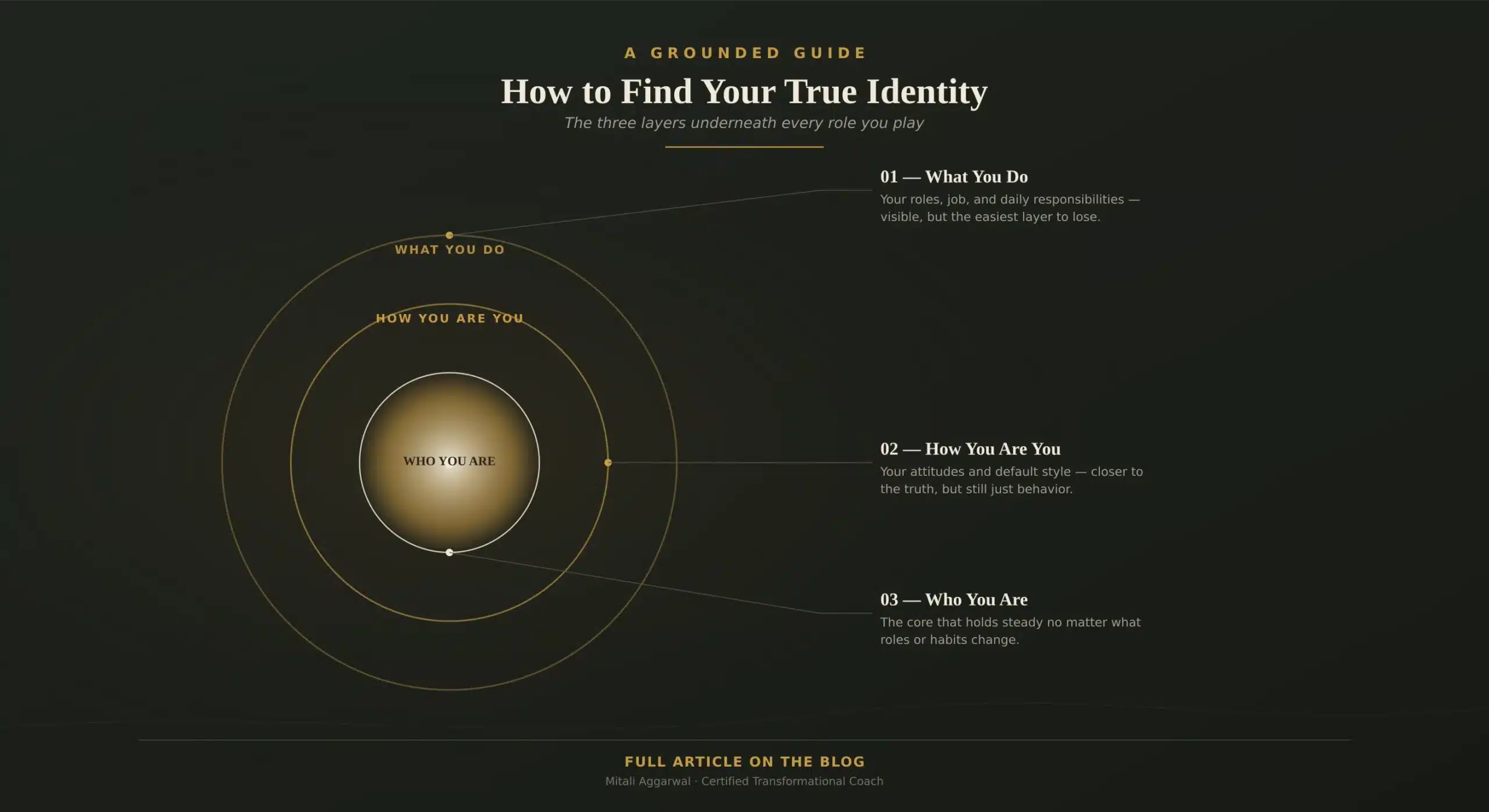
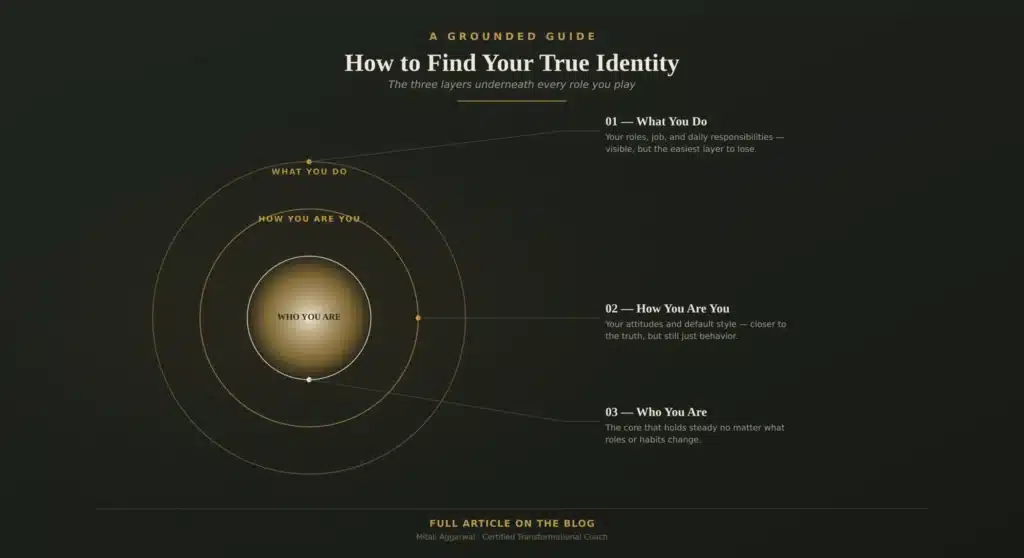
A simple, practical way to work through this is to think of identity as three concentric layers, moving from the most visible to the most essential.
Layer 1: What You Do
This is the outermost layer — your job, your daily roles, your responsibilities, the things that would appear on a resume or an introduction at a party. It’s the layer most people default to when asked “who are you,” and it’s the easiest to lose entirely when circumstances change.
This layer isn’t unimportant. It’s just incomplete. Two people can hold the exact same job title and be almost nothing alike underneath it — which is your first clue that this layer alone was never going to answer the real question.
Layer 2: How You Are You
The middle layer is less about what you do and more about your particular way of doing it: your attitudes, your default responses under pressure, your preferences, your style of showing up. This is the layer that explains why two people in identical roles feel completely different to be around.
This layer is closer to the real answer, but it’s still describable in terms of behavior — patterns other people could observe if they watched you for long enough. It’s a meaningful step inward, but it’s still not quite the center.
Layer 3: Who You Are
This is the core — not what you do, not how you do it, but what remains true about you underneath both. It’s harder to name precisely because it isn’t a role or a behavior; it’s closer to your actual values, your non-negotiables, and the through-line that stays consistent even when your circumstances, habits, or roles change completely.
Most people have never consciously articulated this layer, not because it doesn’t exist, but because nothing in daily life requires you to name it. You can function perfectly well without ever answering it — right up until a major life change forces the question.
Why This Distinction Actually Matters
Separating these three layers isn’t just a semantic exercise. It has real, practical consequences:
- It protects you during transitions. If your sense of self was built entirely on Layer 1 (what you do), a job loss or life change can feel like losing your entire identity. If you’ve done the work of identifying Layer 3, the outer layer can shift without taking your sense of self down with it.
- It clarifies decision-making. When a choice conflicts with Layer 3 (who you actually are), it tends to feel wrong even if it looks right on paper. Naming that layer explicitly makes it much easier to notice that friction early, instead of after you’ve already committed.
- It reduces the exhausting effort of performing. A lot of chronic tiredness isn’t physical — it’s the cost of running Layer 1 and Layer 2 in ways that don’t actually match Layer 3. Closing that gap is often more restorative than any amount of rest.
How to Start Working Through the Layers Yourself
You don’t need a retreat or a major life crisis to do this work — a structured worksheet is enough to start.
- Start with Layer 1. List your roles and responsibilities plainly: job, relationships, daily obligations. This part is usually easy and takes a few minutes.
- Move to Layer 2. For each role above, ask: what’s my particular way of doing this? Consider your default attitudes, your working style, your preferences under stress. This layer takes longer, because it requires actual self-observation rather than just listing facts.
- Sit with Layer 3 longest. Ask what stays true about you across every role and every mood — not what you’d like to be true, but what actually holds up when you look honestly. This layer resists quick answers; it’s normal for it to take real time, and to get revised as you keep working on it.
The goal isn’t to fill in the worksheet perfectly in one sitting. It’s to start noticing which layer you’ve been operating from, and to get more precise about the one most people never examine.
The Real Payoff for Your Identity
Most identity work fails because it stays at Layer 1 — new habits, new routines, a new title — without ever reaching the layer underneath. That’s why so much self-improvement feels exhausting rather than clarifying: you’re rearranging the outer ring while the actual question sits untouched at the center.
Working through all three layers, in order, doesn’t produce a dramatic epiphany. It produces something quieter and more durable: a clearer sense of what’s actually you, and what was only ever a role you were playing.
Book a Free Clarity call today and improve your odds: https://calendly.com/mitaliaggarwalr/30min
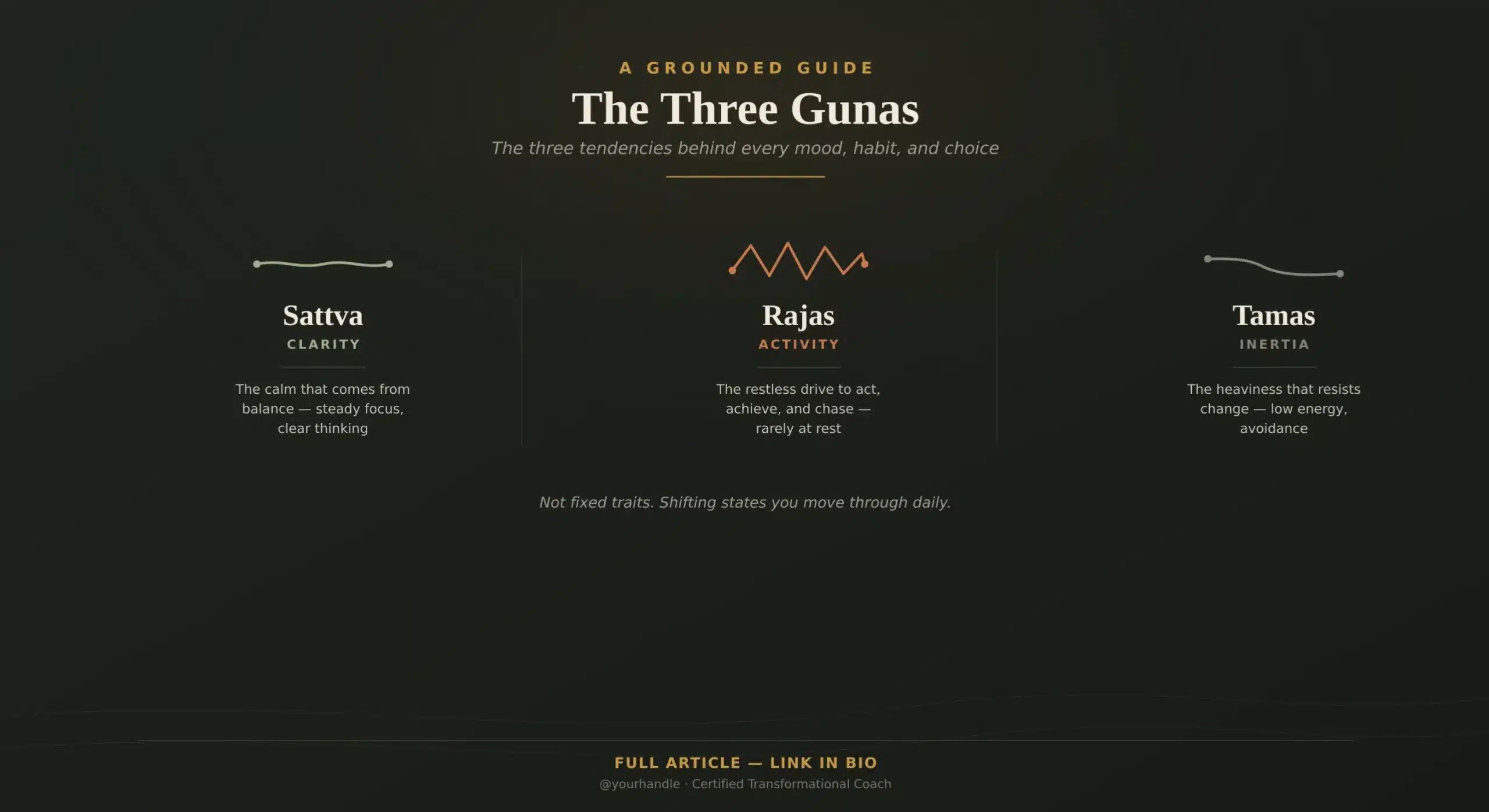
Know more about yourself with this amazing article on the 3 typical gunas in a person’s identity: https://mitaliaggarwal.com/the-3-gunas-explained-satva-rajas-and-tamas-spiritual-life-coaching-in-india/